
Revenue is up. Your business is growing, and you’re busier than you’ve ever been. You may have even hired help. And yet when you look at your bank account, it feels like there’s never quite enough.
If that sounds familiar, you’re not imagining it, and you’re not doing anything wrong. “My business is growing, so why do I feel broke?” is one of the most common things I hear from service-based business owners. It usually shows up right around the time a business starts to really work.
Why a growing business can feel like going backwards
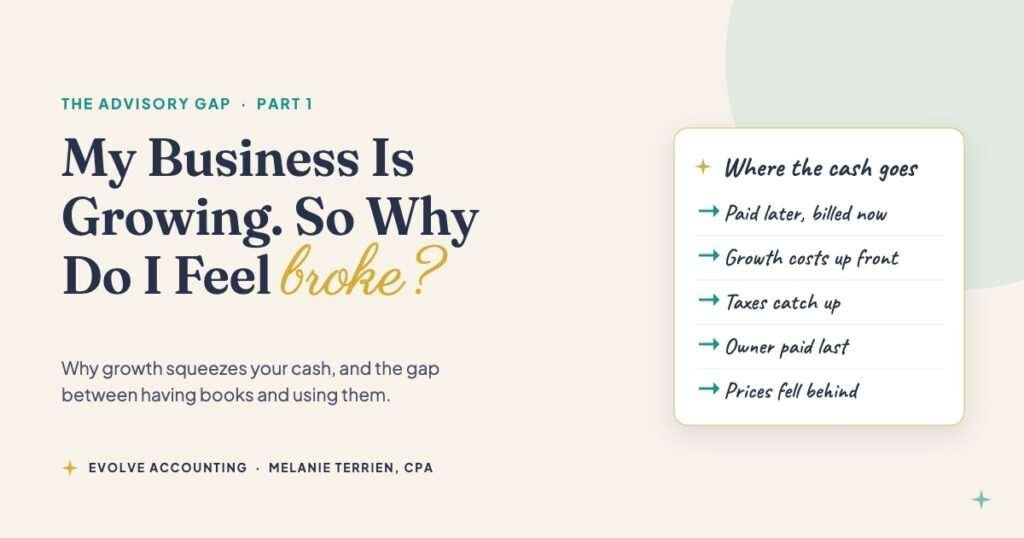
Growing businesses run into the same handful of cash squeezes. Most owners are dealing with two or three at once:
- Profit isn’t the same as cash. You might do the work in March and get paid in May. Meanwhile, rent, payroll, and software bills keep coming on schedule.
- Growth costs money before it makes money. A new hire, a bigger space, or better software all get paid for up front. The extra revenue they bring in shows up later.
- Taxes grow with your profit. More profit means a bigger tax bill, and if you haven’t been setting money aside, it lands all at once.
- Your pay is whatever’s left over. When there’s no set amount, the owner is the last one paid, and in a tight month, not paid at all.
- Your prices haven’t kept up. If your costs went up and your rates didn’t, you can be busier and keep less of each dollar.
None of these mean your business is failing. They mean it has gotten bigger than the way you’ve been managing the money.
The gap between having books and using them
Here’s the part that surprises people. Many of the owners who tell me they feel broke actually have decent books. The transactions are categorized. The accounts are reconciled. The reports exist.
But clean books only tell you what already happened. They don’t tell you what to do next: whether you can afford to hire, how much cash to keep on hand, what to pay yourself, or which part of your business is actually making money.
I call that space between having the numbers and using them the Advisory Gap. It’s where a lot of growing businesses get stuck, and it’s what this series is about.
Three questions to start with
You don’t need a finance degree to start closing the gap. Pull up your Profit & Loss for the last six months and see if you can answer these:
- What’s my profit margin? Of every dollar that came in, how many cents did the business keep?
- How many months could I cover my expenses with the cash I have right now?
- What will I owe in taxes this year, and how much have I set aside?
If you can’t answer them, that’s okay. Most people can’t at first. If your books are too far behind to even try, start with my post on the 5 signs your business finances need attention. Getting caught up comes first.
What’s coming in this series
Over the next few weeks, I’ll walk through the difference between bookkeeping and advisory, and how to decide what to pay yourself. Each post is meant to give you something you can use right away, even if you never work with me.
If you’d rather talk it through now, book a free discovery call. Bring your questions, even the ones you think you should already know the answer to.
No judgment. Just clarity.