
Therapists, counselors, and other private practice owners are some of my favorite people to work with. You’re skilled, caring, and very good at what you do. And most of you were never taught a single thing about running the money side of a private practice.
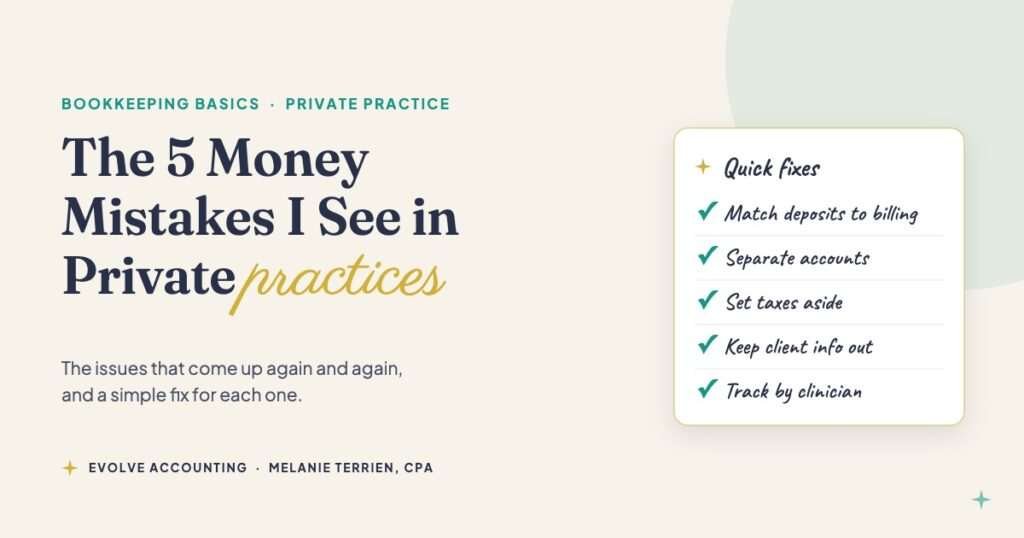
So it’s no surprise that the same few issues come up again and again. Here are the five I see most, and what to do about each one.
1. Recording deposits instead of what you actually earned
Insurance payments rarely match what you billed. A single deposit might cover a dozen sessions, minus adjustments, and copays come in separately. If your books only show deposits, you can’t tell what you’re really earning, what’s still owed to you, or whether a payer is shorting you.
The fix: once a month, compare your billing or EHR report to what actually landed in the bank. That one habit catches a lot of missing money.
2. Practice and personal money in one account
It’s easy to start a practice with your personal checking account. But once the practice is real, mixing the two makes it hard to see what the practice earns, and it makes tax time harder than it needs to be.
The fix: open a separate business checking account and pay yourself from it on a set schedule. If you’re a single-member LLC, read why you shouldn’t be on payroll before you set that up.
3. No plan for taxes
When nothing is withheld from your income, taxes become your job. Many practice owners skip quarterly estimated payments, or guess at them, and end up with a big bill (and penalties) in April.
The fix: move a set percentage of every deposit into a separate savings account just for taxes, and base your quarterly payments on your actual year-to-date profit, not last year’s return.
4. Client information in your books
This one is unique to practices. Client names often end up in transaction descriptions, invoice memos, or receipts in your accounting software. That software isn’t built to protect health information, and your bookkeeper doesn’t need to see it.
The fix: keep client details in your EHR, and record income in your books by payer or as a daily or weekly total.
5. Not knowing what each clinician or service earns
If you’ve added clinicians, growth can hide a problem. Some services or schedules may cost more to deliver than they bring in, and a single overall Profit & Loss won’t show you that.
The fix: track revenue by clinician or service type in your books, so you can see what’s actually working before you hire again.
Where to start in your private practice
If you spotted your practice in a few of these, please don’t read it as a failing grade. It just means your practice has grown past the system you started with. That’s a good problem to have.
If your books are behind, a cleanup gets you to a clean starting point. If you’d like to keep doing them yourself, my DIY options give you the routines and support to stay on track. Or book a free discovery call and tell me about your practice. No judgment, ever.